A camera that looks great on a store shelf can turn into a source of frustration once it's actually mounted outside and exposed to real weather, real distances, and real lighting changes. Outdoor conditions are unforgiving in ways indoor spaces never test for, and a camera that wasn't built with those conditions in mind tends to reveal its weaknesses fast, usually right when footage matters most. When comparing outdoor video surveillance cameras, buyers should consider how well each model handles changing weather conditions, varying distances, and different lighting environments.
Buyers who skip a bit of upfront research often end up disappointed by grainy night footage, a camera housing that cracks after one winter, or a field of view that misses exactly the spot they needed covered. None of these problems are hard to avoid, but they do require knowing what to check before buying rather than after installing. This guide covers the specific factors that separate outdoor cameras worth trusting from ones that end up back in a drawer within a year.
Weatherproofing Ratings That Actually Mean Something
An IP rating on a camera's spec sheet tells you exactly how much protection it has against dust and water, and it's one of the few outdoor-specific numbers worth checking closely. A rating like IP65 or IP66 indicates strong resistance to rain and dust, which is the baseline for most exterior mounting spots. Cameras without a clearly listed IP rating, or ones only rated for splash resistance, are a risk in any climate that sees real rain, snow, or humidity swings throughout the year.
Temperature range matters just as much as water resistance, especially in climates with hot summers or cold winters. A camera rated only for mild conditions can start malfunctioning once temperatures drop below freezing or climb into the upper nineties, and repeated exposure to extremes can shorten the lifespan of internal components even if the camera keeps working. Checking the manufacturer's listed operating range against local climate norms takes a few minutes and avoids a costly mismatch.
Housing Materials and Long-Term Durability
Beyond the IP rating, the actual housing material affects how a camera holds up over years of sun exposure and temperature cycling. Cheaper plastic housings can become brittle and discolored after a couple of summers of UV exposure, while more durable polycarbonate or metal housings tend to hold their seal and appearance much longer. It's a detail that rarely shows up in marketing copy but makes a real difference five years down the line.
Night Vision and Low-Light Performance
Most break-ins and package thefts happen after dark, which makes night vision performance one of the most important factors for outdoor cameras, yet it's also one of the easiest specs to overstate. Infrared range numbers on packaging often reflect best-case lab conditions rather than real backyard distances, so it helps to look for sample night footage in reviews rather than relying on the number alone. Color night vision, which some newer cameras offer using a small spotlight or advanced sensor, can also make a meaningful difference in identifying details like clothing color or vehicle type compared to traditional black-and-white infrared.
Placement affects night performance too, since a camera mounted near a porch light or streetlamp will perform differently than one in a completely dark corner of a yard. Testing footage after dark during the first few nights, post-installation, is worth the extra step since it's much easier to catch and fix a lighting or angle issue early than after months of relying on footage that turns out to be unusable.
Field of View and Coverage Planning
A wide field of view sounds like an obvious advantage, but past a certain point it can actually distort footage at the edges of the frame, making it harder to identify faces or read license plates near the sides. A more moderate, well-calibrated lens often produces more useful footage than an ultra-wide one, particularly for spots like a front door or driveway where the area of interest is fairly narrow and centered.
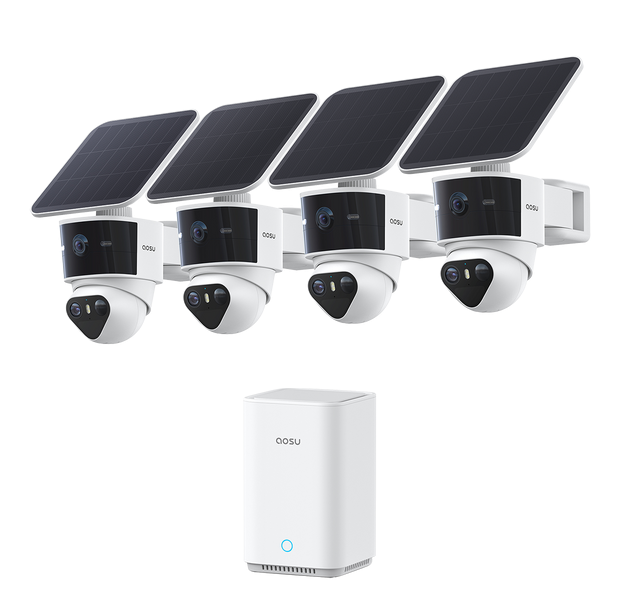
Mapping out coverage before buying, rather than after, helps avoid gaps or unnecessary overlap between multiple cameras. Walking the property and noting exact distances from each proposed mounting point to the area that needs coverage gives a much better sense of which lens angle and camera count actually make sense, rather than guessing based on square footage alone. Brands like AOSU publish field-of-view specs for each camera model, which makes this kind of planning easier to do accurately before a purchase.
Multi-Camera Systems and Blind Spot Checks
Properties with multiple entry points or a large perimeter usually need more than one camera to avoid blind spots, and it's worth sketching a rough map of coverage zones before installing anything. Overlapping just slightly at the edges of each camera's view is generally better than leaving a gap, since gaps are exactly where incidents tend to go unrecorded.
Setup Considerations for Long-Term Reliability
Mounting height and angle play a bigger role in usable footage than most people expect. A camera placed too high can end up capturing mostly the tops of heads, while one placed too low is more vulnerable to tampering. A height of roughly eight to ten feet, angled slightly downward, tends to strike a good balance for most residential setups, though driveways and larger open areas may benefit from a slightly different angle to capture approaching vehicles clearly.
Once installed, outdoor cameras benefit from periodic lens cleaning, since dust, pollen, and spiderwebs accumulate faster outside than most people realize and can gradually degrade footage quality without being immediately obvious on a small phone screen. Setting a seasonal reminder to check firmware updates and physically inspect each camera keeps a system performing the way it did on day one.
Research Now Saves Frustration Later
The gap between a satisfying outdoor camera and a disappointing one usually comes down to a handful of specs that are easy to check but easy to overlook: real weatherproofing ratings, honest night vision performance, and a field of view that matches the actual space being covered. None of these require deep technical knowledge, just a willingness to look past marketing claims and verify the details that matter for a specific property.
Taking that extra bit of care before buying tends to pay off for years, resulting in a system that keeps producing clear, reliable footage through every season rather than becoming another camera quietly forgotten after the first bad storm.