The Invisible Backbone of Smart Homes: Networks, Security, and the Rise of Intelligent Visualization
The modern smart home is no longer a futuristic concept, it’s an evolving ecosystem powered by interconnected devices, intelligent automation, and increasingly sophisticated data processing. From AI-driven thermostats to autonomous security systems, today’s homes are becoming dynamic digital environments. However, beneath the surface of convenience lies a complex foundation: networking infrastructure, data security, and advanced visualization technologies that shape how users interact with their environments.
This article explores how these elements converge to define the future of smart homes and why understanding them is essential for any tech enthusiast.
The Smart Home Is Only as Smart as Its Network
At the core of every smart home lies a robust and reliable network. While consumers often focus on devices like smart speakers or cameras, the real performance bottleneck is frequently the home network itself.
Mesh Networks vs Traditional Routers
Traditional routers struggle to keep up with the demands of dozens of connected devices. Mesh networking systems have emerged as a solution, offering distributed connectivity through multiple nodes. This ensures consistent coverage, reduced latency, and better device handoff.
For example, when streaming 4K video from a security camera while simultaneously running IoT automation scripts, a weak network can introduce lag, packet loss, or even device failure. Mesh networks mitigate these risks by dynamically routing traffic through optimal paths.
Bandwidth Allocation and Device Prioritization
Modern routers now support Quality of Service (QoS) features, allowing users to prioritize traffic. This becomes critical when security devices, like door locks or surveillance cameras, must operate without interruption. In a well-configured system, your smart lock signal will always take precedence over a gaming console download. This hierarchy ensures both performance and safety.
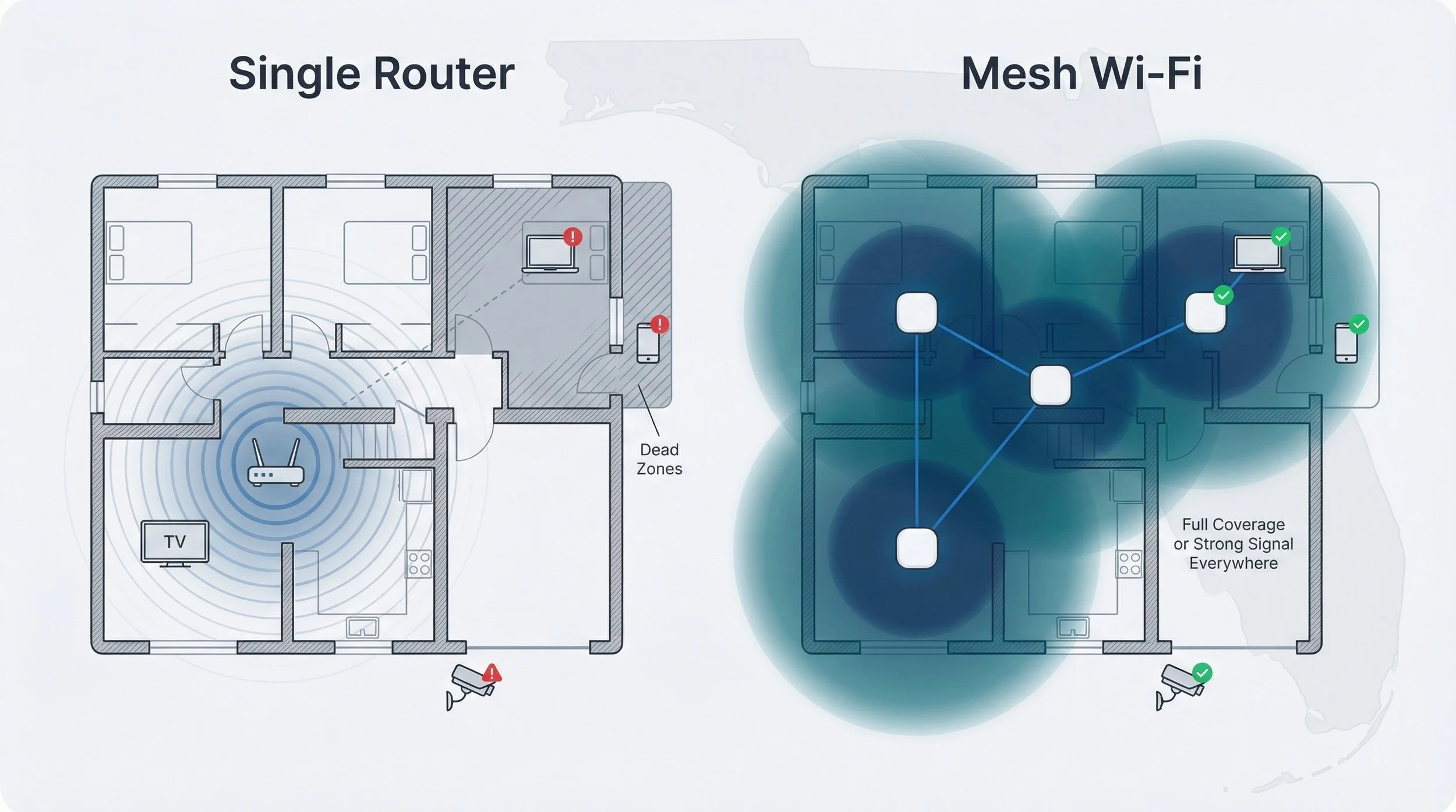
Mesh vs single router example
Security: The Double-Edged Sword of Connectivity
As homes become more connected, they also become more vulnerable. Each device added to a network is a potential entry point for attackers.
The Problem with IoT Security
Many IoT devices are built with minimal security protocols to reduce cost and complexity. Weak passwords, outdated firmware, and lack of encryption are still widespread issues.
A compromised smart device can serve as a gateway into the entire network. Once inside, attackers can intercept data, monitor activity, or even gain control over other devices.
Zero Trust Architecture for Homes
Originally designed for enterprise environments, Zero Trust security models are now making their way into consumer tech. The principle is simple: trust nothing, verify everything.
In a smart home context, this means:
Devices must authenticate continuously
Network segmentation isolates critical systems
Data access is strictly controlled
For example, your smart fridge should not have the same level of access as your home security system.
Data Privacy: The Silent Concern
Beyond hacking risks, there’s a growing concern about how data is collected and used. Voice assistants, cameras, and sensors generate vast amounts of personal data.
Consumers are becoming more aware of:
Where their data is stored
Who has access to it
How it is monetized
Regulations like GDPR have pushed companies toward better transparency, but enforcement and compliance still vary widely.
Visualization: Making Complex Systems Understandable
As smart homes grow more complex, user interfaces must evolve. This is where visualization plays a crucial role.
From Dashboards to Digital Twins
Early smart home apps relied on simple dashboards; lists of devices with toggles and status indicators. Today, the trend is shifting toward immersive visualization.
Digital twins (virtual replicas of physical environments) allow users to interact with their homes in a more intuitive way. Instead of scrolling through menus, users can navigate a 3D model of their house, tapping on rooms and devices directly.
This is where a 3d visualisation company becomes essential. These companies develop highly detailed, interactive environments that integrate real-time data from IoT systems. The result is not just a control interface, but a spatial experience.
Benefits of 3D Visualization in Smart Homes
Contextual Awareness: Users understand device placement and relationships instantly
Improved Diagnostics: Identifying issues becomes easier when visualized spatially
Enhanced Automation: Rules can be tied to physical zones rather than abstract device lists
For example, instead of programming “turn off all lights at 11 PM,” a user can define behavior for specific areas like “dim lights in the living room when no motion is detected.”
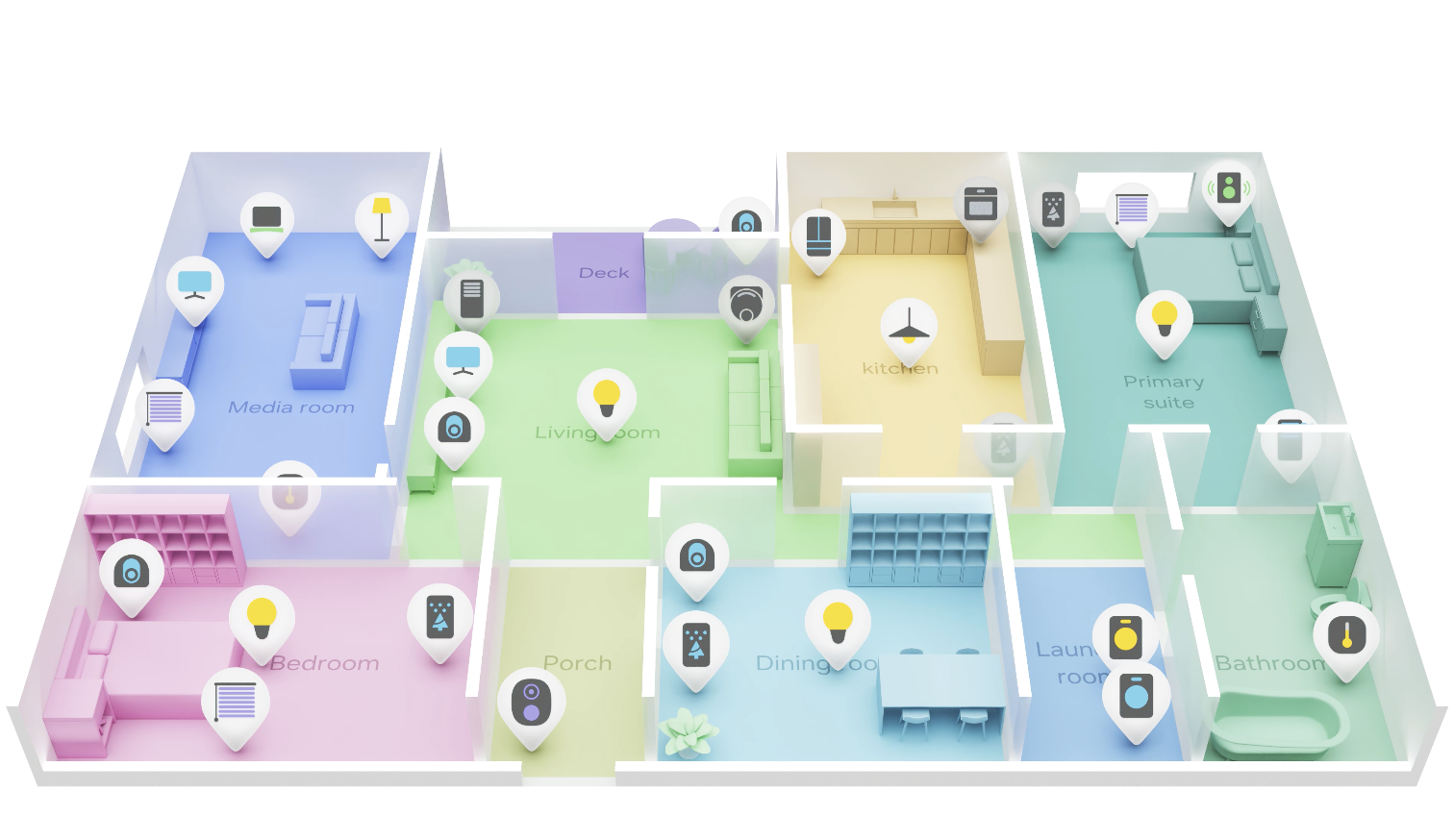
A 3D smart home interface
AI and Predictive Automation
Artificial intelligence is increasingly embedded into smart home systems, shifting automation from reactive to predictive.
Behavior-Based Automation
Rather than relying solely on user-defined rules, AI systems learn patterns over time. They can anticipate actions based on:
Daily routines
Environmental conditions
Historical device usage
For instance, your home may begin preheating rooms before you arrive, based on your location data and past behavior.
Edge Computing vs Cloud Processing
A key technical debate in smart home architecture is where data should be processed.
Cloud-based systems offer powerful analytics but raise privacy concerns
Edge computing processes data locally, reducing latency and improving security
The future likely lies in hybrid models, balancing performance with privacy.
Interoperability: The Industry’s Biggest Challenge
One of the most frustrating aspects of smart homes is the lack of standardization. Devices from different manufacturers often fail to communicate effectively.
The Role of Matter Protocol
The introduction of the Matter protocol aims to solve this problem. Developed by a coalition of major tech companies, Matter provides a unified standard for device communication.
This means:
Easier device setup
Cross-platform compatibility
Reduced vendor lock-in
While adoption is still ongoing, Matter represents a significant step toward a more cohesive ecosystem.

Matter data heirachies improve interoperability
The Future: Autonomous Homes
Looking ahead, smart homes are moving toward full autonomy.
Self-Healing Networks
Future systems will automatically detect and resolve network issues without user intervention. If a node fails, traffic reroutes instantly. If a device behaves abnormally, it is isolated.
Adaptive Security Systems
Security systems will evolve to detect not just intrusions, but anomalies in behavior. For example, if a door unlocks at an unusual time, the system may require additional authentication.
Immersive Interfaces
Visualization will continue to advance, potentially integrating augmented reality (AR). Imagine pointing your phone at a wall and seeing hidden wiring, network status, or device health in real time.
Conclusion
The smart home revolution is not just about convenience, it’s about creating intelligent, adaptive environments that respond to human needs in real time. However, achieving this vision requires more than just buying the latest gadgets.
It demands a deep understanding of networking, security, and user interaction. As systems become more complex, tools like advanced visualization and AI-driven automation will be critical in making technology both powerful and accessible.
For tech enthusiasts, this is an exciting frontier where infrastructure and innovation intersect to redefine how we live.