Smart Home Features Buyers Actually Want (Security, Comfort, Savings)
Safety sells, and today’s buyers know it. Roughly 94 million U.S. households, about 71%, already use at least one smart-security device, and 52% run a camera. Parks Associates tracks the same rise: video-doorbell ownership jumped from 4% in 2017 to 20% in 2023. In other words, what once felt like a perk is now the baseline.
Why the rush? A video doorbell lets you greet a courier from the office; a smart lock ends the “key under the mat” habit, and instant phone alerts confirm the kids got home. Every day, peace of mind makes the value tangible.
For sellers, pre-installed security is gold. A move-in-ready listing with cameras, smart locks, and an active alarm system signals lower risk, less work, and, often, higher offers.
Core Smart-Security Devices Buyers Expect
Walk into a so-called smart listing, and four fixtures usually greet you. Each one solves a common worry, so shoppers notice them fast.
Video doorbell and exterior cameras. More than one in five U.S. internet households owns a video doorbell today, up from 4% in 2017. These lenses guard parcels, let owners speak with visitors, and stream clips to a phone. Seeing that slim doorbell on the porch tells buyers they can watch the house whether they’re upstairs or overseas.
Smart lock. Roughly 36% of U.S. households use a smart lock in 2025, double the share five years ago. Enter a code, hand out a temporary pass for dog-walkers, and stop asking, “Did I lock up?” Convenience plus security is why agents highlight the lock before they reach the kitchen.
Whole-home alarm system. Door and window sensors, motion detectors, a hub with battery backup, and (if you subscribe) 24/7 monitoring from the core. SafeHome’s latest report shows more than half of U.S. homes run at least one alarm or camera, with ADT and Ring leading the pack. Buyers ask whether monitoring is professional or DIY, and whether the panel, along with any fees, stays with the house.
Smart exterior lighting. Motion-activated floods and app-controlled porch lights deter intruders and light the path to the trash cans. Exterior security lighting ranks among the top three most-desired outdoor features, cited by 87% of Florida buyers and more than 80% nationwide. When the lights pop on as the agent walks up the drive, the home feels safer and better maintained.
Together, these four staples create a turnkey safety net. They protect more than doors and windows; they protect the sale by showing buyers the home takes security seriously.
Cloud Vs. Local Storage: Read The Fine Print
Surprise fees can dull the shine of any smart-security setup. Every camera clip needs a home, and where it lives decides what you pay over time.
Cloud plans. Popular tiers such as Ring Protect Basic ($4.99 per month) and Nest Aware Standard ($8 per month, rising to $10 in 2025) store video on the brand’s servers. You gain off-site backup and quick access, but the bill never stops. Three cameras on Nest Aware can cost $96–$120 a year, essentially a new utility.
Local storage. Doorbells that record to a micro-SD card or a hub (Eufy, Reolink, and some Arlo models) charge you once at checkout. Footage stays on-site, so there is no monthly fee, and the cameras keep rolling even if the internet drops. The trade-off: if a thief takes the device or the drive fails, the clips are gone unless you have a backup.
What smart buyers ask during a tour: “Is there a monthly fee to keep these cameras working, and can I switch to local storage?” A seller who can answer, “No. Everything records locally, but cloud is optional,” earns immediate trust. When the system is cloud-only, transparency about costs beats post-closing sticker shock.
Insurance bonus. Many carriers trim 5–10% off premiums when a monitored alarm or leak sensor is active. Cloud or local storage does not matter; proof of active monitoring is what saves money.
Bottom line: choose the storage route that protects both your footage and your wallet. Knowing the numbers up front keeps smart security from turning into a slow leak of cash.
Comfort And Cost Savings
Smart tech is not only about safety; it can also trim your utility bill. Two upgrades deliver the biggest return: climate control and lighting.
Smart Thermostats: Small Box, Big Payoff
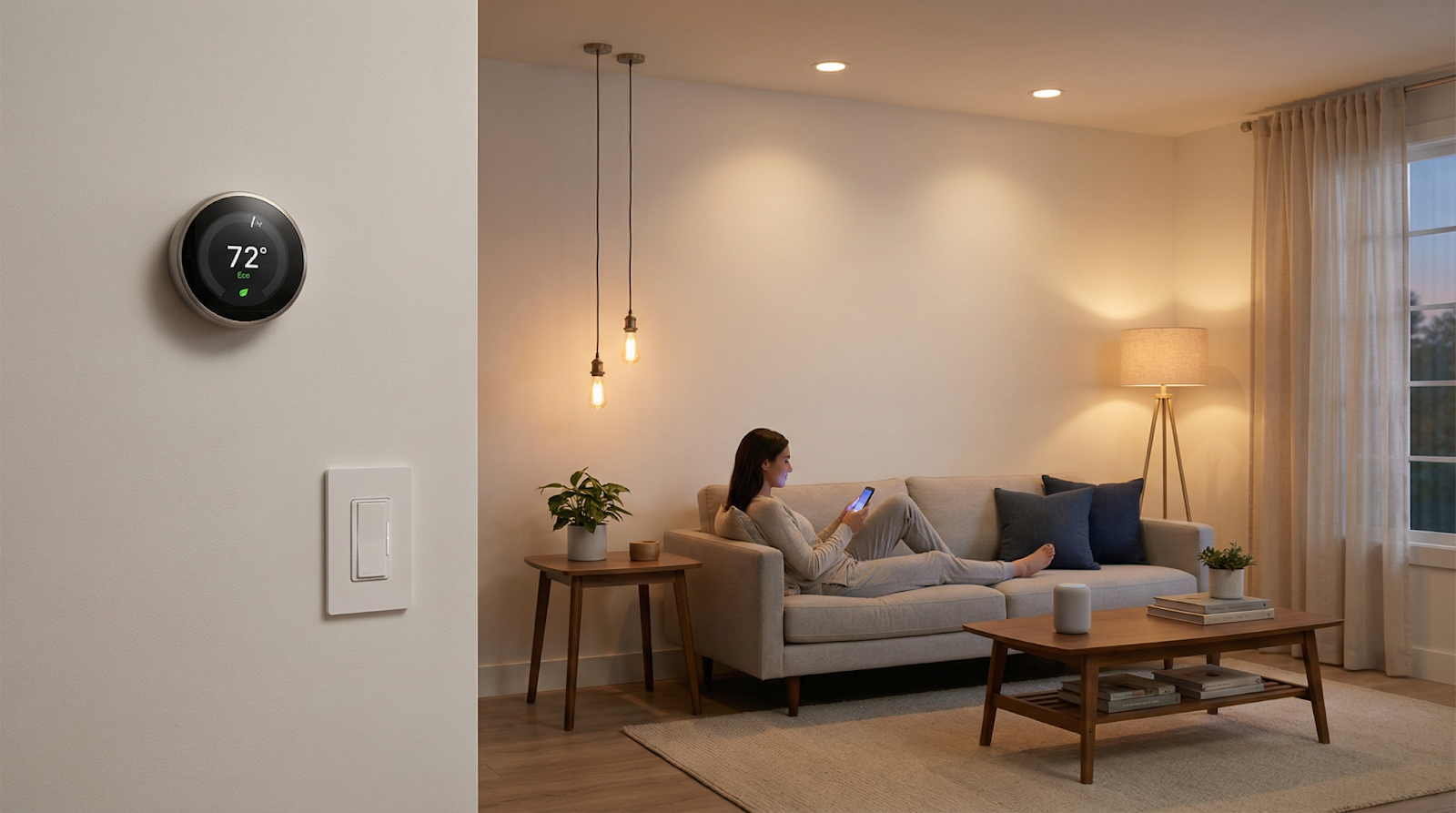
Heating and cooling cost the average U.S. home about $900 a year. An ENERGY STAR-certified smart thermostat learns your routine, slips into eco mode when no one is home, and cuts that total by roughly 8%, or about $50 each year. Adoption sits near 16–17% of U.S. internet households, so a listing with a Nest, Ecobee, or Honeywell still feels ahead of the curve. Hardware starts near $80, pro installation runs $200–$350, and many utilities offer $50–$75 rebates, shrinking out-of-pocket cost before a seller even goes to market.
Real-estate specialists at Squarefoot Homes add that showcasing a freshly installed smart thermostat can make your listing stand out in competitive markets, often accelerating time to offer and nudging sale prices higher.
Smart Lighting: Ambiance That Lowers The Meter
LED smart bulbs use up to 75% less electricity than incandescents and last up to 25 times longer (DOE, 2025). App or voice control keeps lights off when rooms are empty, and a single cue, “Movie mode”, lets buyers feel the convenience on a tour. Surveys place adoption at about 22% of U.S. homeowners, with another third planning to buy within a year. Swapping a key wall switch for a smart dimmer costs about $40, and buyers can still tap the switch like normal, so even tech-shy guests feel at home while the meter slows down.
Comfort Extras That Raise Eyebrows (In A Good Way)
Smart ceiling fans raise the AC set-point by about 4 °F and can trim cooling costs 10–12%, while ENERGY STAR models are up to 44% more efficient.
Motorized shades that track the sun can cut HVAC energy use 15–20% and keep rooms up to 10 °F cooler during peak heat.
Smart irrigation controllers labeled WaterSense save up to 15,000 gallons a year, roughly $120 on a typical water bill.
Together, these upgrades make a home feel attentive: temperatures stay comfortable, lights react naturally, and monthly bills keep drifting lower, benefits buyers can see, and sellers can showcase.
Smart Thermostats: The MVP of Lower Bills
Heating and cooling cost the average U.S. household about $900 a year (ENERGY STAR, 2025). An ENERGY STAR smart thermostat learns your routine, slips into eco mode when the house is empty, and trims that bill by roughly 8%, or about $50 each year. Some models paired with demand-response programs save even more.
The sleek wall display also signals care. Seeing a Nest, Ecobee, or Honeywell during a tour says “updated, efficient, easy.” Hardware starts near $80, while pro installation runs $200–$350.
Before you sign, ask two questions:
Will the thermostat stay?
Will the seller reset it to factory settings at closing?
A clear “yes” to both keeps control and data where they belong, squarely in your hands.
Smart Lighting: Ambiance That Pays For Itself
Smart fixtures shape mood and slash waste. LED bulbs use at least 75% less electricity than incandescents and last up to 25 times longer (DOE, 2025). With app or voice control, lights turn off when rooms are empty, dim to 50% at bedtime, or mimic occupancy while you travel.
Adoption is growing: about 22% of U.S. homeowners own smart lighting, and another third plan to buy within a year. On a showing, one cue, “Alexa, movie mode”, lets buyers feel the convenience.
Swapping a key wall switch for a smart dimmer costs about $40 and takes minutes. Buyers can still tap the switch like normal, so even tech-shy guests feel at home while the meter slows.
Beyond The Thermostat: Extras That Elevate Everyday Comfort
Smart climate control does not stop at the wall stat. Three add-ons deepen comfort while trimming more dollars from monthly bills.
Smart ceiling fans. ENERGY STAR fans are up to 44% more efficient than conventional models and let you raise the AC set-point by about 4 °F, cutting cooling costs 10–12%. Automatic seasonal direction changes keep rooms comfortable.
Motorized shades. In sunny climates, insulating shades that track the sun can lower HVAC energy use 15–20% and keep rooms up to 10 °F cooler during peak heat. They also block UV that fades floors and furniture.
Smart irrigation. An EPA WaterSense controller saves up to 15,000 gallons of water a year, or roughly $120 on a typical bill. Weather-aware zones keep lawns green without waste.
Individually, these upgrades feel like luxuries; together, they turn the house into an attentive partner, quietly balancing air, light, and water so you can focus on living, not tinkering.
Simplicity And Reliability
Unified Control Starts With One Language
A smart home feels effortless only when everything speaks the same dialect. As of October 2025, about 1,200 products are Matter smart home standard–certified, and 350 companies belong to the standard’s working group. The green Matter logo signals that a lock bought today will still pair with tomorrow’s phone, whether you prefer Apple, Google, Samsung, or Alexa.
Seller tip: Choose one ecosystem and note it in the listing (“All devices run on Matter via Google Home”).
Buyer tip: ask, “Can I manage everything from one app?” A clear “yes” promises a smooth hand-off.
Strong Wi-Fi: The Invisible Backbone
U.S. homes now average 21 connected devices, and roughly 32% of internet households use a mesh system. A Wi-Fi 6 mesh kit, priced around $250–$400, spreads bandwidth across nodes, keeping 4K streams smooth even in the attic.
Seller tip: highlight “whole-home Wi-Fi 6 mesh” in listing copy.
Buyer test: open a streaming app in the far bedroom; instant loading means the network can handle dozens of gadgets.
Backup plans keep the lights and locks on
Power: A $75–$150 uninterruptible power supply keeps the router and security hub alive for about one hour, enough to ride out most blips. In storm-prone regions, a standby generator adds days of autonomy.
Internet: Many alarm panels include 4G or LTE fail-over, so alerts still send when the cable line goes down. Look for the badge during a tour.
Mechanical overrides: Smart locks still accept a key, and garage doors keep a pull cord. Sellers should demonstrate both at the final walk-through.
Privacy Stays With The People, Not The House
Factory-reset every smart device before closing to erase data, then create fresh admin credentials and enable two-factor authentication. With that five-minute ritual complete, only invited guests can peek inside.
Smart Features That Pay Off In Winter And Summer Markets
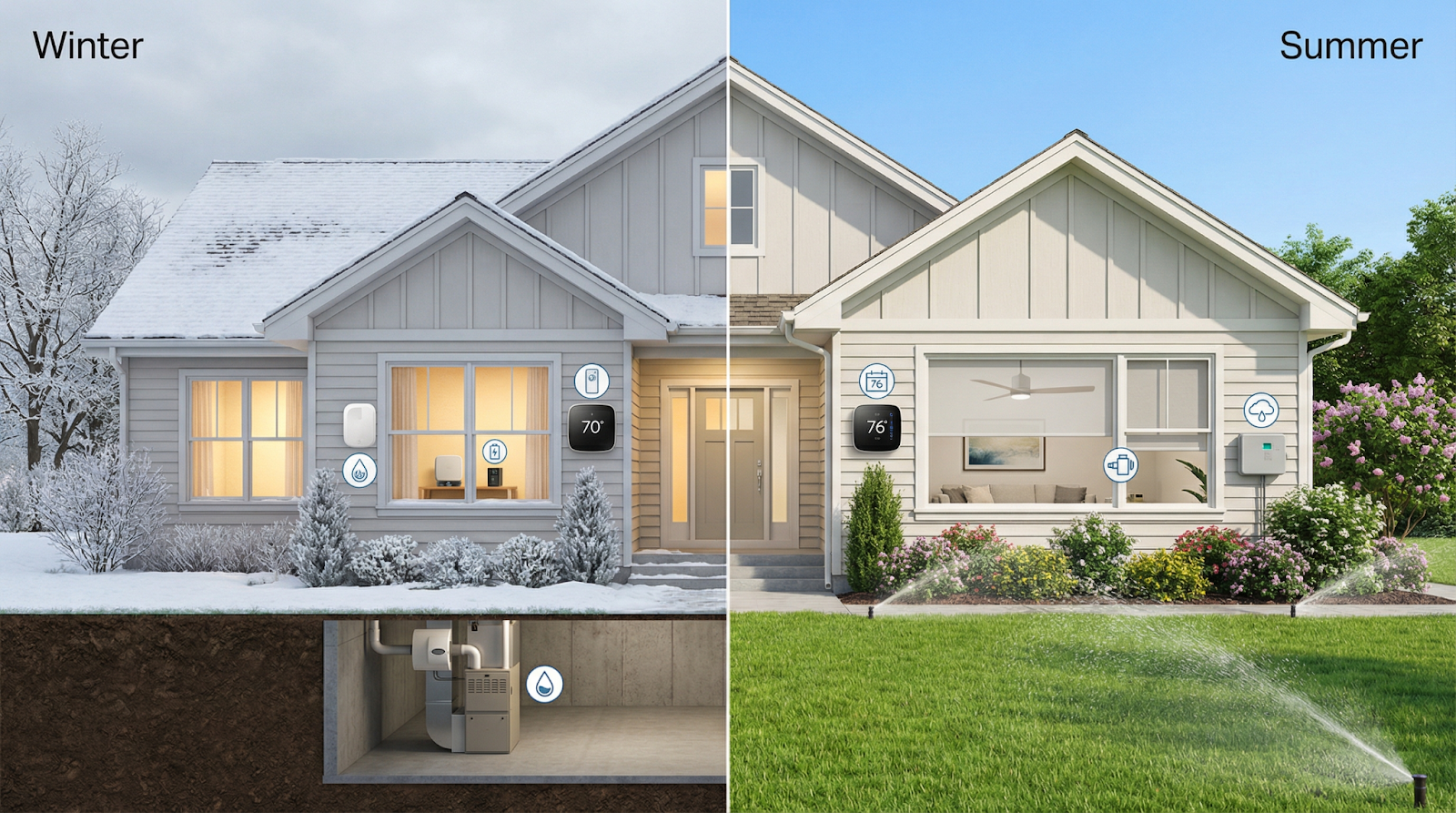
In markets with long winters, buyers focus on protection, efficiency, and reliability during outages.
Smart thermostats with remote sensors keep bedrooms warm without overheating the whole house and prevent frozen pipes when owners travel.
Smart leak and freeze sensors placed near water heaters, basements, and exterior walls alert owners before burst pipes cause damage.
Smart humidifiers tied to HVAC systems prevent overly dry indoor air, reducing static, cracked wood, and respiratory discomfort.
Battery-backed hubs and Wi-Fi failover keep alarms and alerts online during snowstorm outages, a key buyer concern in colder states.
Hot-weather and summer-dominant regions
In warmer climates, buyers care most about cooling costs, sun control, and outdoor efficiency.
Smart thermostats with learning schedules reduce AC runtime during peak heat and cut cooling bills during long summers.
Motorized shades and smart blinds block solar gain in the afternoon, keeping rooms cooler without closing off natural light.
Smart ceiling fans let buyers raise the thermostat setting while staying comfortable, lowering energy use.
Weather-aware smart irrigation controllers adjust watering during heat waves or rain, protecting landscaping without wasting water.
Quick Upgrades That Help A Home Sell Faster
You do not need a $10,000 automation system to impress buyers. Zillow’s 2022 listing analysis found that homes mentioning a programmable thermostat, smart lights, or smart sprinkler system sold 3–6 days faster than similar listings.
Here are three weekend projects that pay back in speed and perception:
Install a smart thermostat (≈ $120 hardware, 30-minute DIY). ENERGY STAR reports that a certified model can cut heating and cooling costs by about $50 a year, and many utilities offer $50–$75 rebates, shrinking the net cost. The sleek display signals efficiency to every visitor.
Swap the front deadbolt for a keypad lock, and add a video doorbell (≈ $180–$300 total). Security features rank as the top smart-home desire. Buyers like watching a code unlock the door and seeing a live porch feed on the agent’s phone; the combo turns curb appeal into curb confidence.
Add smart lighting in high-impact zones (≈ $40 per dimmer). A quick voice cue, “Alexa, welcome home”, fades entry lights to a warm glow. LED smart bulbs use 75% less energy than incandescents, and listings that tout smart lights close up to four days faster than average, according to the same Zillow study. A practical rundown of the kitchen upgrades for resale, such as ventilation, layered lighting, and cleanup-friendly finishes, can help you prioritize what to tackle next.
Conclusion
Smart home upgrades work when they solve daily problems buyers care about: safety they can see, comfort they can feel, and savings they can measure. Cameras, locks, and alarms set a trust baseline, while thermostats, lighting, and water controls trim monthly costs. Keep systems simple, compatible, and reset for the next owner. Do that, and smart tech stops feeling like a gadget list and starts acting like what buyers want most, a home that’s easier to live in and easier to buy.